🔙 Looking Back: From 4.0 to 5.0
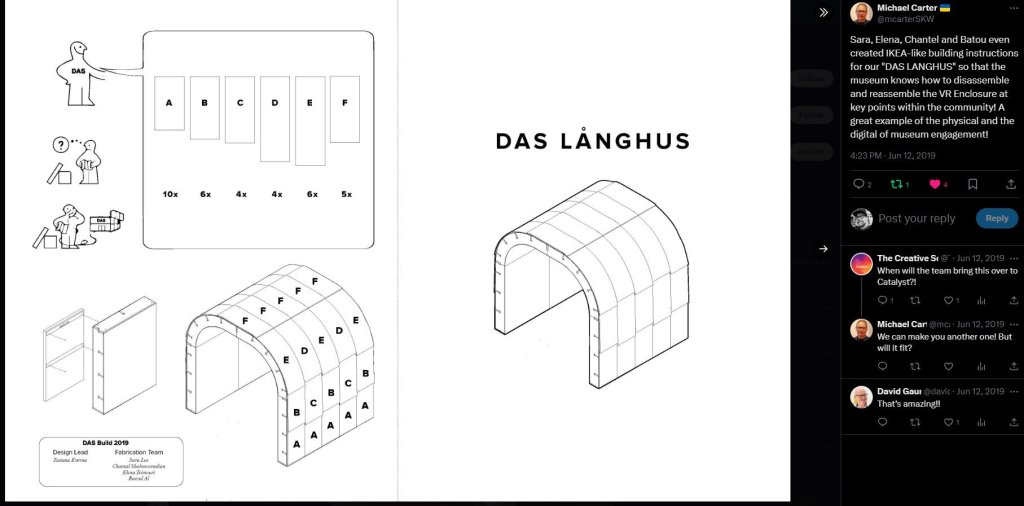
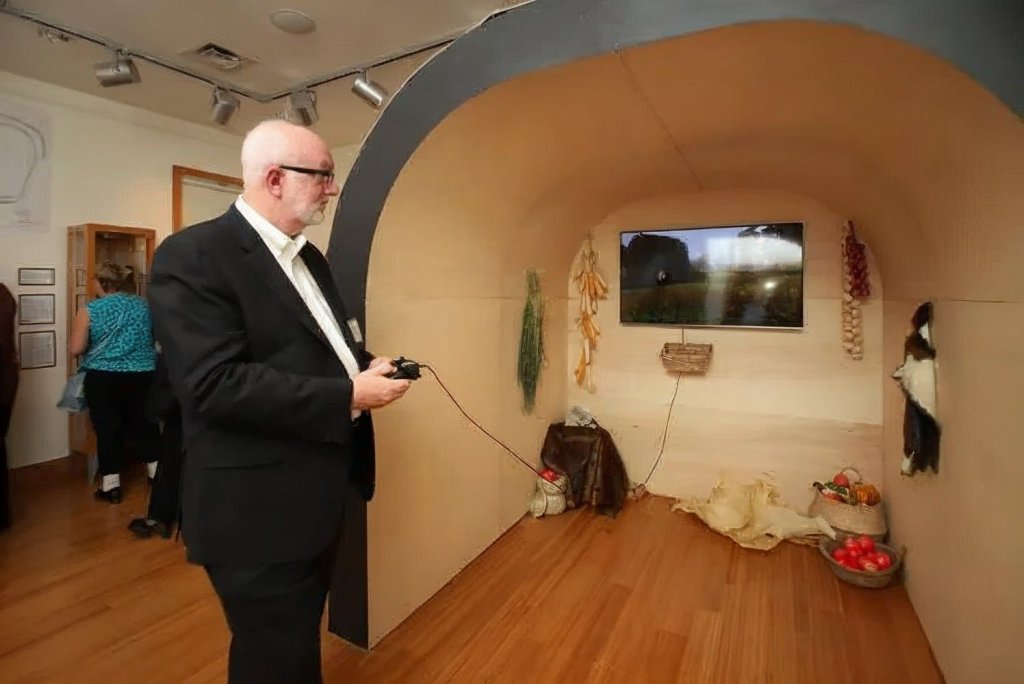
I joined the Longhouse project in 2017 for version 4.0, a prototype that combined a physical vestibule (built by Professor Vincent Hui and his architecture team at Toronto Metropolitan University) with digital media to explore how presence could be evoked through sensory design. Displayed at the Whitchurch-Stouffville Museum and Community Centre, the experience blended scent, space, and 3D reconstruction to create a multi-sensory encounter with Wendat heritage. Though just a fragment, it revealed the potential for something far more ambitious.
🏞️ Longhouse 5.0: A Living Village
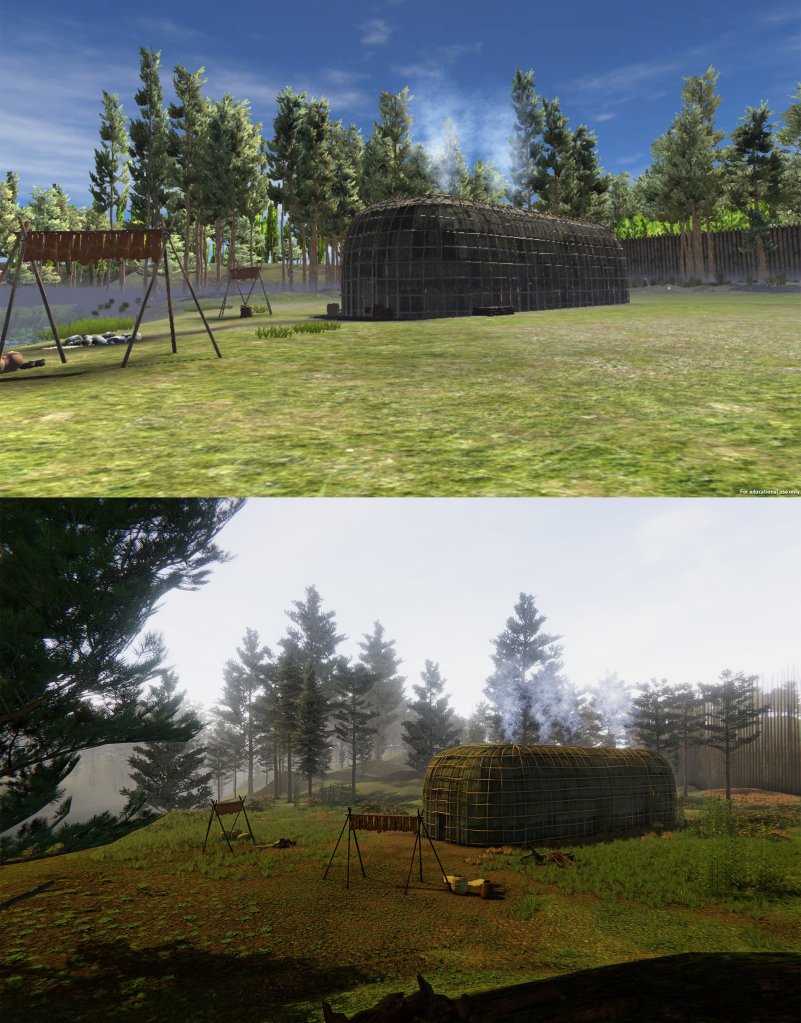
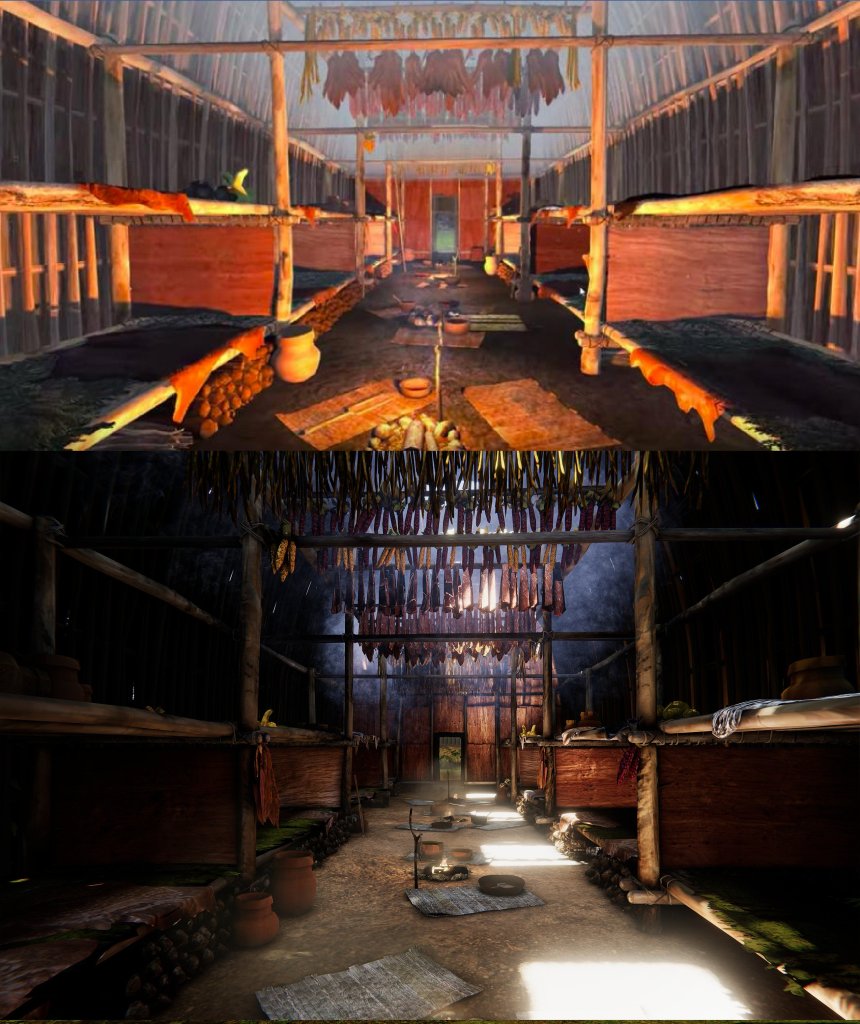
With support from E-Campus Ontario, we launched Longhouse 5.0 in 2021, expanding from a single structure to a full reconstruction of the Jean-Baptiste Lainé site. What began as a research prototype evolved into a collaborative production with contributions from Sheridan and TMU students, Jean-Philippe Thivierge and members of the Wendat Nation, and the Awastoki 3D team.
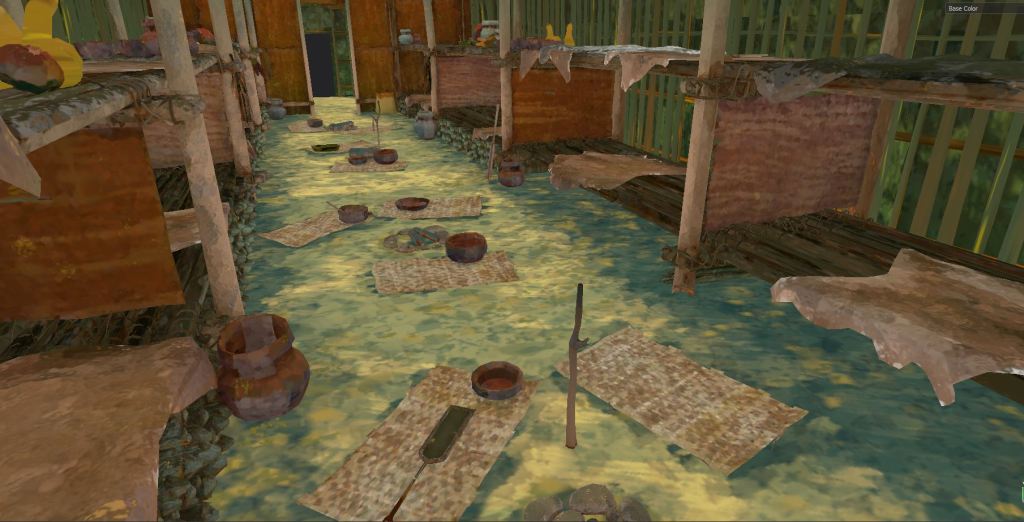
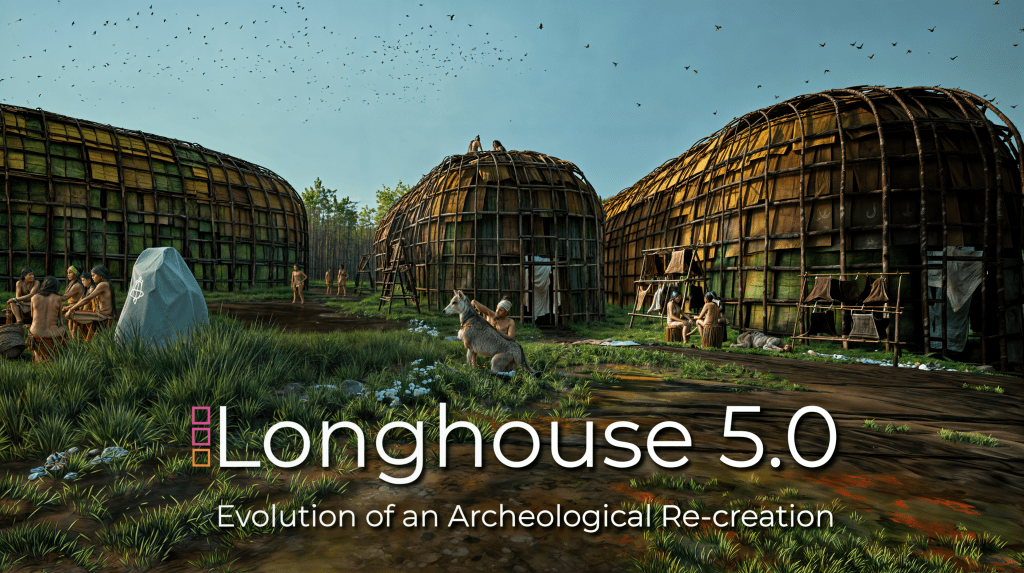
One of the most significant improvements was populating the space. Previous versions felt eerily empty—more like abandoned sites than living communities. This time, we introduced people. Characters created through the Awastoki pipeline breathed life into the village. Combined with stylized visuals, they shifted the experience away from static reconstruction toward something more embodied and culturally grounded.
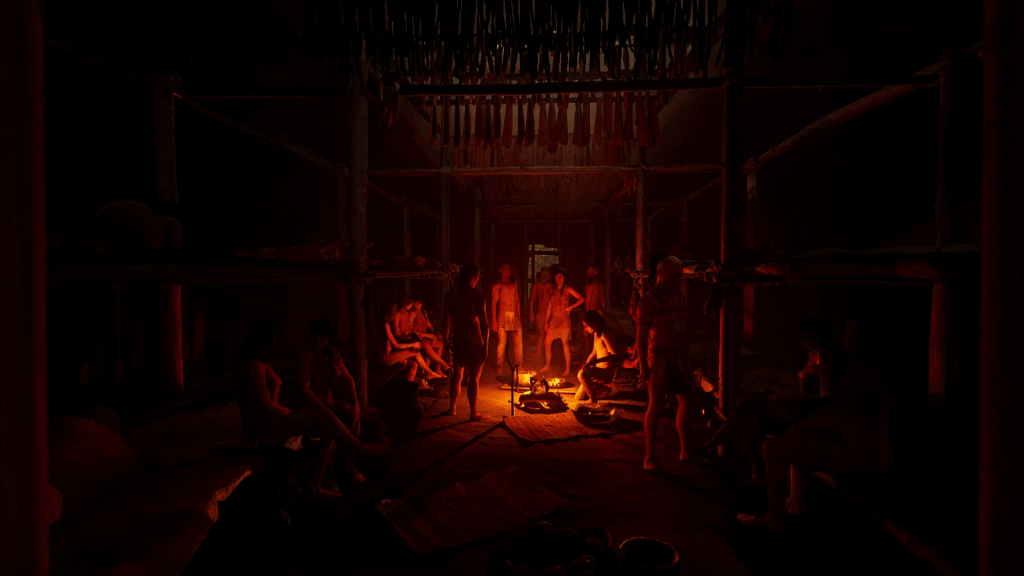
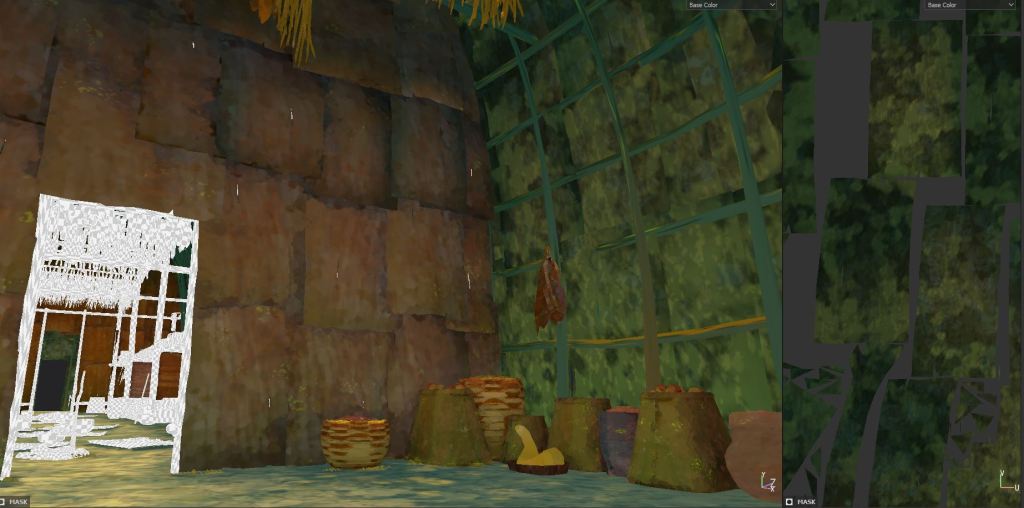
Our technical pipeline—Maya, Zbrush, Substance Painter, Houdini, and Unreal Engine—allowed us to navigate between archaeological evidence, oral knowledge, and real-time technical constraints.
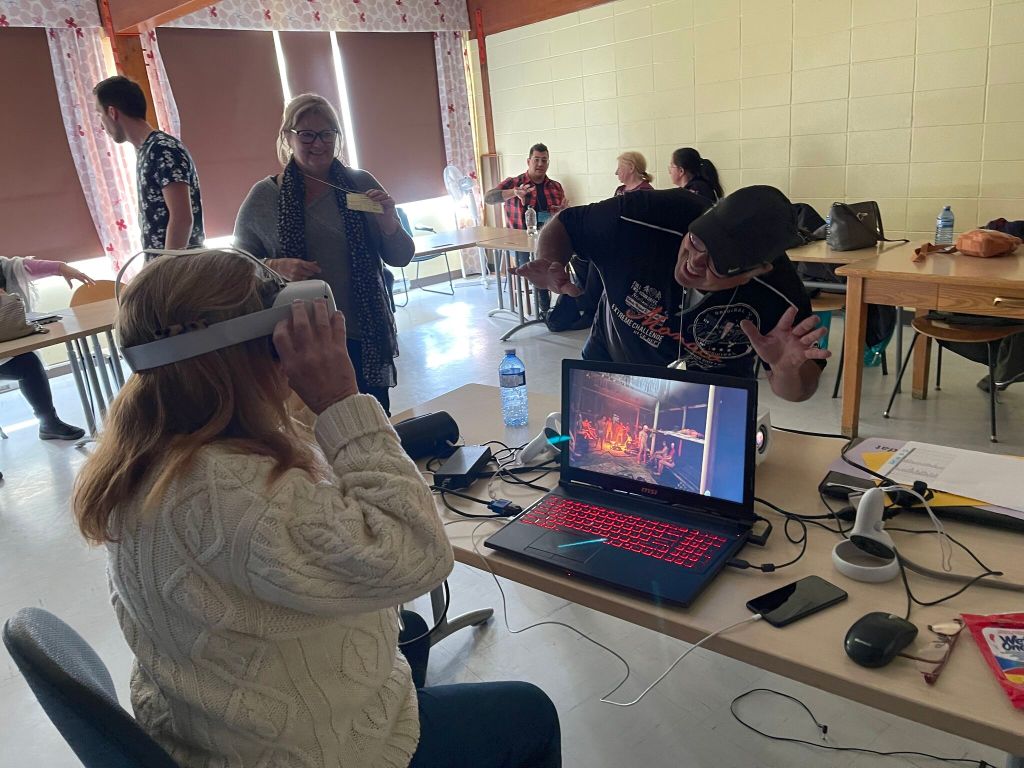
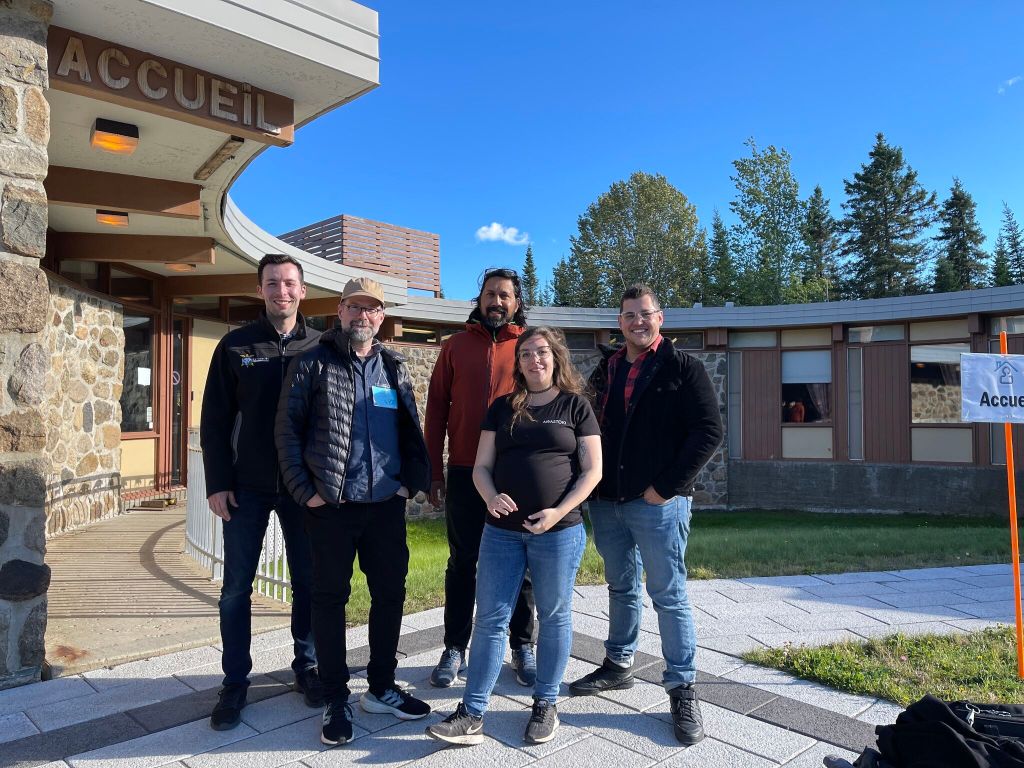
The project culminated at the Cabane d’automne in Wendake, where community members across generations experienced the VR village—many for the first time. Their reactions confirmed what we’d come to believe: digital heritage is most powerful when rooted in reciprocity and shared authorship.
🌐 Documenting the Process: Longhouse5.ca
The development blog at longhouse5.ca became more than documentation—it evolved into a living archive of how Longhouse 5.0 took shape. Through dozens of posts, contributors like Steve Sayer, Namir Ahmed, and others shared insights into everything from procedural bark workflows to terrain building, vegetation systems, and prop modeling.
These posts didn’t just showcase what we created—they explained why. Each decision was anchored in source material: archaeological reports, oral history, historical documents, or community input. That level of transparency became central to the project and shaped our thinking about authorship, accountability, and paradata.
This mindset continues with Longhouse 6.0. The process matters as much as the product—and documenting that process remains essential to the work.
🏛️ Beyond VR: Shifting Spaces and Uses
Though originally designed for VR at the Musée Huron-Wendat, the COVID-19 pandemic forced us to reconsider shared equipment. We explored alternate platforms like TMU’s Igloo dome but ultimately went in a different direction.
Instead, I developed a cinematic sequence in Unreal Engine for a vertically mounted screen in the museum. The final piece guides visitors from the riverbank into the village, ending with a sweeping aerial perspective from the longhouse rooftop. Optimized for a passive museum experience, it preserves the emotional arc and sense of presence from the original vision.
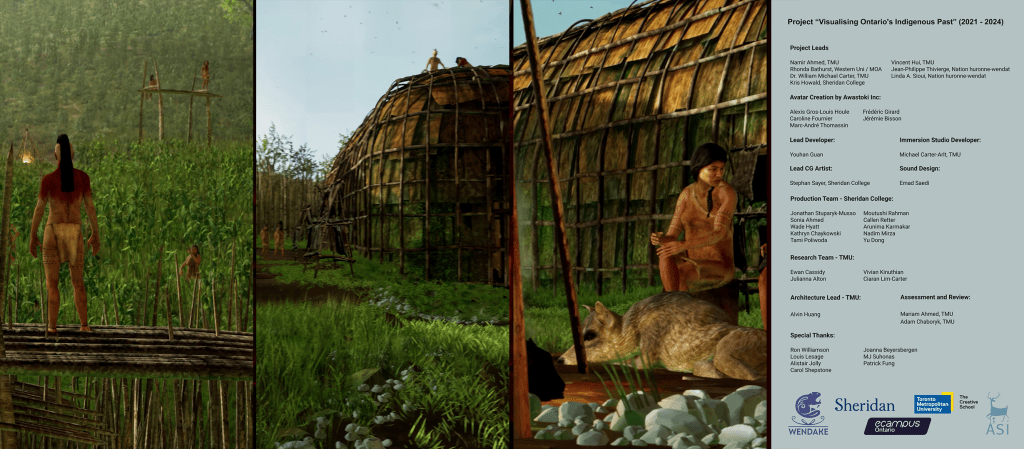
Since then, the project has attracted interest from educators, cultural centers, and museums seeking new ways to engage with Indigenous history and land-based storytelling. It’s beginning to find applications beyond its original scope—both as a teaching resource and a conversation starter.
📘 Reflecting and Publishing: What We Learned
Co-authoring a chapter in “Visualising the Indigenous Architectural Past through Virtual Reality & Gaming” (published December 2024) gave us a chance to step back and analyze what we built—and how. Working with Namir Ahmed and Dr. William Michael Carter, we explored the challenge of balancing:
- Fragmentary archaeological records
- Oral histories
- Ethical digital design
Our chapter focuses on the London Charter principles—especially transparency, authority, and paradata—and argues that game engines can be legitimate platforms for cultural work, not just entertainment. Vincent Hui pointed to our project as an example of that in action, which was encouraging to hear. It’s something I’ve believed for a long time, but it’s rare to see that perspective acknowledged in academic circles.
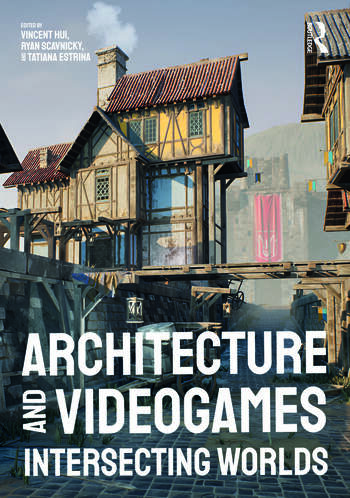
For a deeper dive into the theoretical and methodological considerations behind Longhouse 5.0, check out our chapter in Visualising the Indigenous Architectural Past through Virtual Reality & Gaming, featured in the new Routledge volume Architecture and Videogames: Intersecting Worlds (edited by Vincent Hui, Joseph Scavnicky, and Elie Estrina).
Available here via Routledge
ISBN: 978-1-032-52885-4
🚀 Looking Ahead: What Is Longhouse 6.0?
Longhouse 6.0 marks a return to higher-fidelity, tethered VR, enabling us to explore materiality, lighting, and realism in ways that weren’t possible under mobile constraints. But this isn’t just about graphics.
Here’s what’s new:
Goals
- Focus on emplaced realism: a smaller scene centered on a hero longhouse, sweat lodge, and surrounding horticultural space, allowing for more detailed, affective rendering.
- Explore art and ceremonial knowledge within the longhouse—expanding beyond function into meaning.
- Engage more deeply with sound, ritual, and seasonal change.
Pipeline
- Unreal Engine 5 for real-time development, using Nanite and Lumen.
- Maya for modeling and layout, with characters created through the Awastoki pipeline.
- Environmental realism inspired by historical and topographic data, integrating references from Williamson, Tooker, and Carter.
Experimental Elements
- A sweat lodge tunnel feature currently in prototyping.
- Integration of more natural character animation.
- A public paradata blog (this one) to document development in real time.
Final Thoughts
Longhouse 6.0 is a continuation, but also a reimagining. Where Longhouse 5.0 mapped space, this version aims to invoke presence. The build begins in May 2025, and with it, a new cycle of research, iteration, and community dialogue.
I’ll be sharing updates, process notes, and assets throughout the build over at longhouse6.ca. If you’re curious about how this comes together—or have thoughts, questions, or perspectives to share—feel free to follow along or get in touch.

 Longhouse 6.0