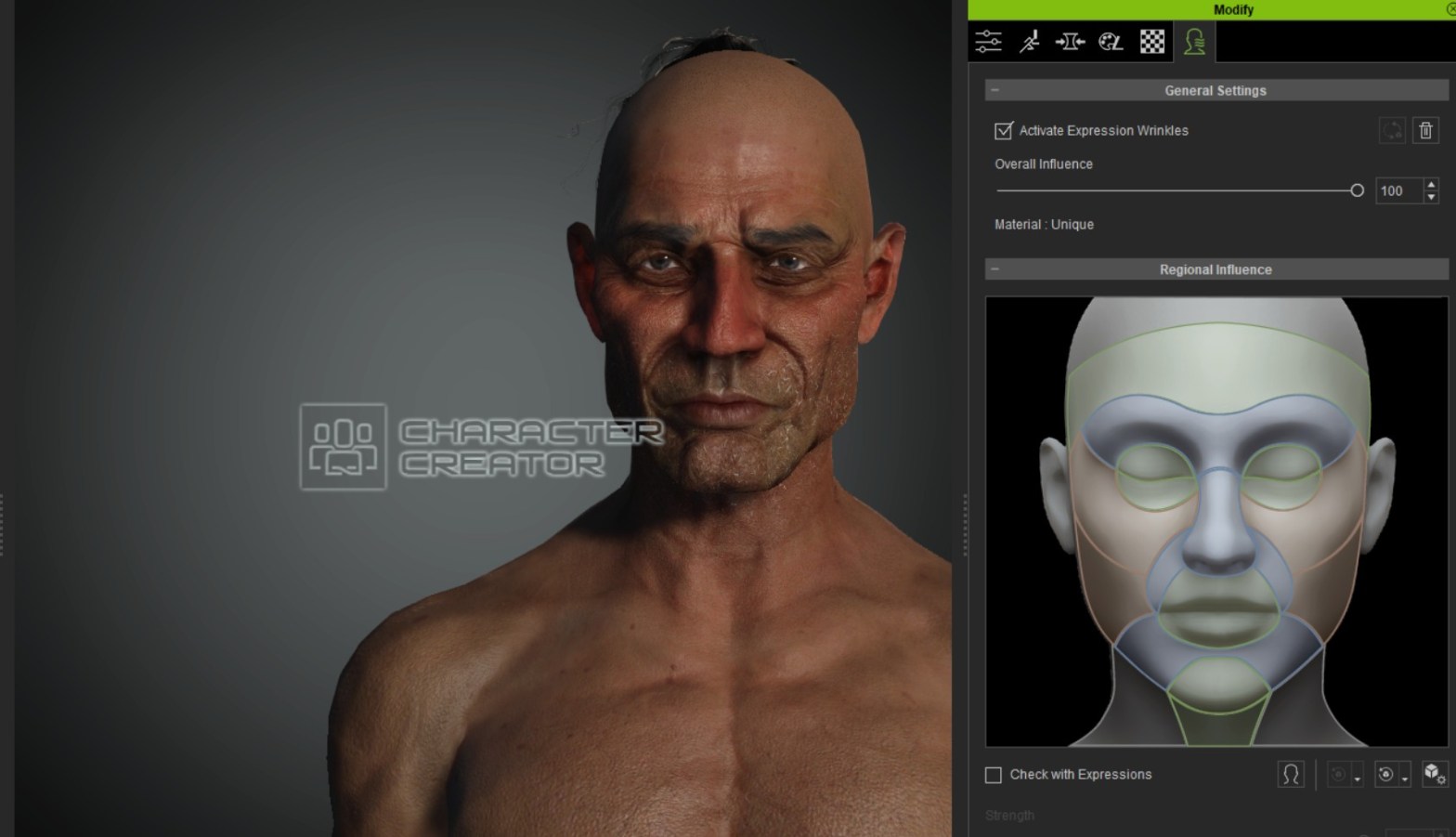
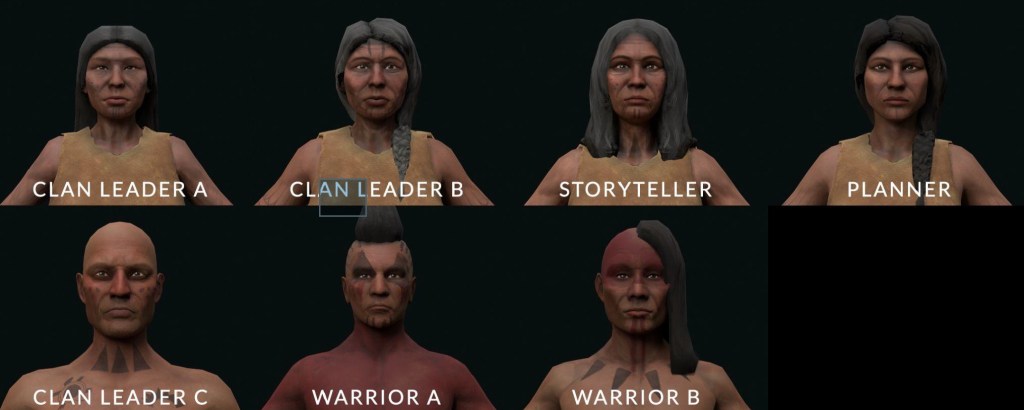
Longhouse 6.0 builds directly on the work from Longhouse 5.0 by bringing high-fidelity characters back into focus. In the previous version, the Awastokì team created seven adult characters. Quite a bit of research went into developing the hairstyles, tattoos, clothing, and accessories. However, given the numbers of people in the village, the final non-player characters (NPCs) had to stay below a 15 polygon count. Higher level details relied heavily on normal maps. As you can imagine, this really reduced the overall quality of the experience.
This time around, I’m integrating the full-detail sculpts directly into Unreal Engine 5.4, using Character Creator 4 for body and facial rigging. Since Longhouse 6.0 is tethered, I really want to push the hardware further. Nanite now supports deforming meshes, so I’m currently testing just how far I can push resolution without completely eliminating performance.
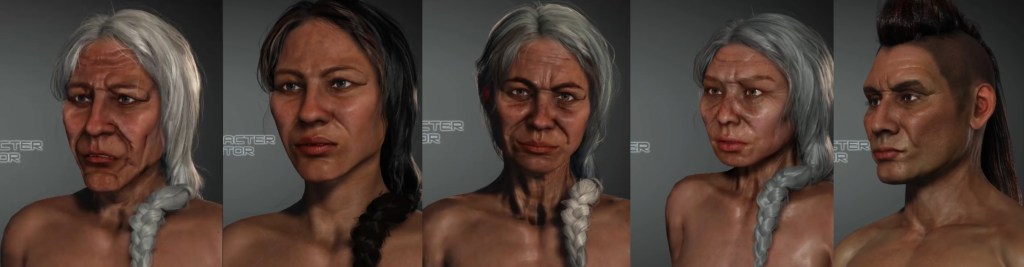
For example, early tests already show a huge difference in facial expression fidelity—those subtle creases around the eyes and mouth actually hold up even at close range, something that just wasn’t possible with the 5.0 NPCs. Small details like the beadwork on clothing, which were once just baked into textures, now hold up as actual geometry.
Many clothing assets are still in their lower-resolution forms, though. I plan to upscale these next and start exploring dynamic simulation for subtle movement—likely through Marvelous Designer or Unreal’s native tools. Haven’t committed to one yet.
I’ve included an initial test video below that shows the models in CC4 and gives a sense of how they hold up and the range of movement available:
I’m curious—if you’ve worked with Nanite on characters, how far have you pushed it? And if you’ve handled dynamic clothing, would you stick with Marvelous Designer or stay inside Unreal?
Until next time.

 Longhouse 6.0